

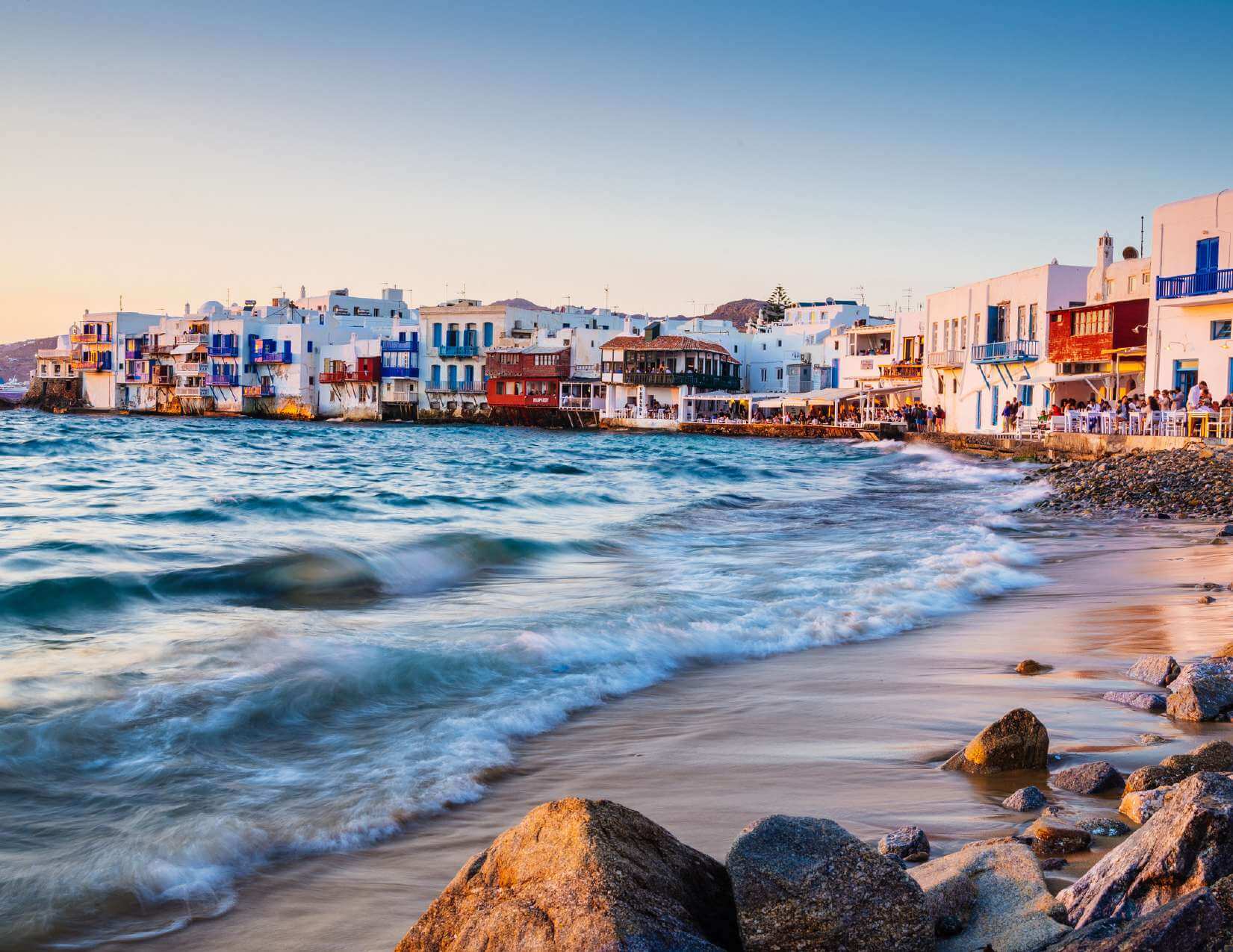
MYKONOS ISLAND
Mykonos is a wonderful Cycladic island, worth visiting at any time of the year. However, it is a must to enjoy the days of its summer glory, when it literally becomes an international village, when its community of believers make it a sight worth seeing, when one can experience the unique feeling that everything and everyone is in Mykonos.
According to mythology, Mykonos was formed from the petrified bodies of giants killed by Hercules. And did you know that the island took its name from the grandson of Apollo, “Mykonos”?
Set out on a journey to discover a fascinating world where glamour meets simplicity. On Mykonos celebrities, college students and families mingle together to celebrate the Greek summer. However, despite its cosmopolitan character, Mykonos remains a beautiful and picturesque island, whose all white Chora lies next to the sea, with golden beaches, friendly and smiling people and a continuous link with history lasting for centuries. If you think you've seen someone that looks famous, then you're probably right. In Mykonos you'll sit right next to famous actors, singers, stars, TV personalities, top models.
In Mykonos there are beaches that cater for all tastes: family beaches such as Lia, trendy beaches like Psarou and quiet beaches such as Agios Sostis.
In contrast to other Cycladic capitals, the capital town (Chora) of the island is not built in the shape of an amphitheater but instead spreads out over a wide area. It is one of the best examples of Cycladic architecture and a spellbinding attraction for visitors. Stroll around its narrow marble streets and admire whitewashed houses with colorful doors and window frames, bougainvillea trees in purple bloom and hidden churches.
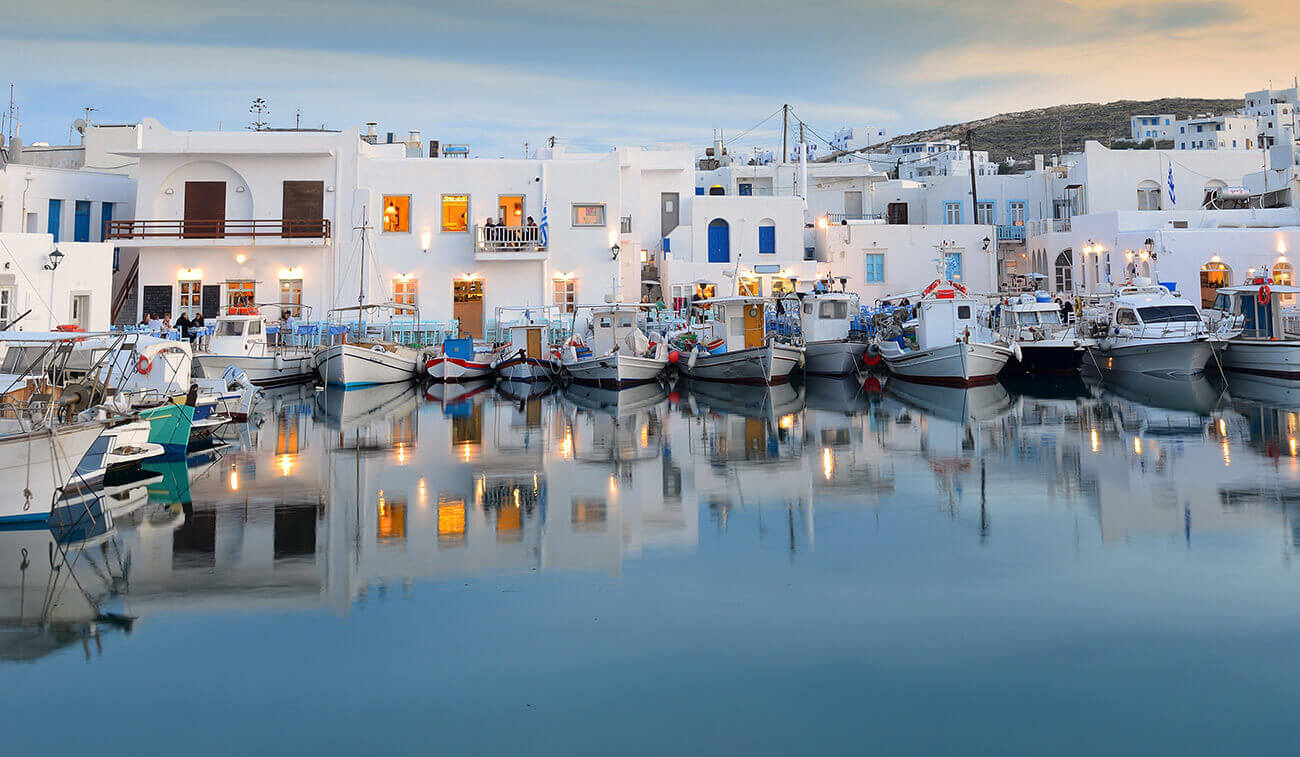
PAROS ISLAND
Paros is so fascinating on so many levels that many people love it having seen only one of its faces. Don't jump to conclusions about what you like, get to know the island first and find your "own" Paros, the face that suits you best. No doubt, though, it will charm you even if you see a different side from the one expected.
The island of Paros is famous for its golden beaches, clear blue waters and nightlife. However, it has much more than that to offer visitors, who will see a different island, offering many alternatives: its rich natural resources, the fascinating cultural heritage, the unique customs, the original traditional dishes and the famous wine, are some of the island's secrets that make visitors return.
Parikia, the capital of Paros, is a beautiful Cycladic village with whitewashed cubic houses and impressive neoclassical mansions. A well preserved 13th century Venetian castle stands proudly on a hill at the center of the village offering an amazing view of Parikia.
Wander through beautiful traditional villages like Naousa, a colorful village, where the ruins of a Venetian fortress stand at the entrance to its small harbor. Lefkes is located at the highest point of Paros and enjoys stunning views of the island. The village is set up in the mountains
and is surrounded by a rich green landscape. It has very well preserved Cycladic and neoclassical buildings, beautiful squares and narrow marble alleys.
Paros offers quality facilities to practice windsurfing, kite surfing, diving, horse riding and trekking. The island has several diving schools (the beaches Chrysi Akti, Santa Maria, and Pounta are ideal for diving). Pounta is the best beach for kite surfing, while the favorite beaches for windsurfing are Tserdakia, Chrysi Akti, Santa Maria and Pounta. The island also has surfing clubs. Amateur fishermen will find ideal spots on the coasts of Paros.
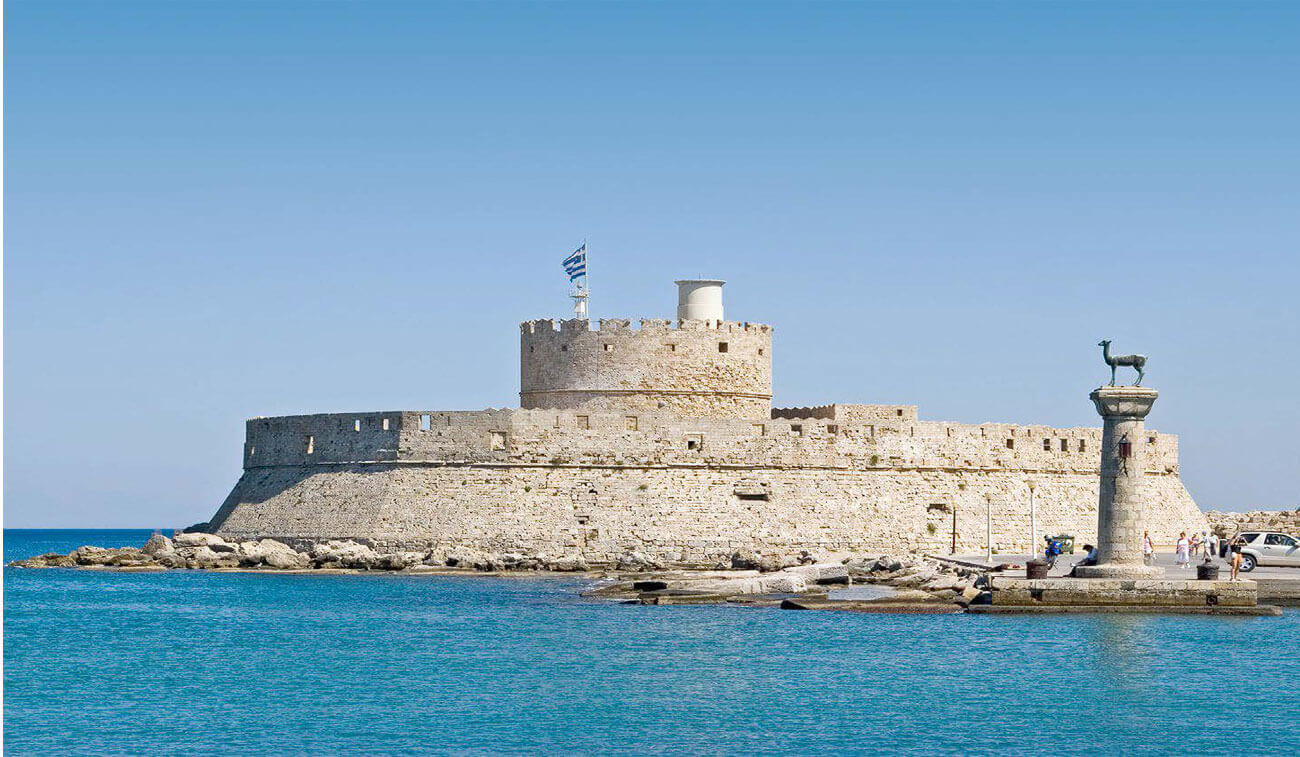
RHODES ISLAND
Welcome to Rhodes, the capital of the Dodecanese, an island which is ideal not only for those who want to relax but also for those looking for an action-packed holiday! With its bright green hills, rich green valleys and uninterrupted line of golden beaches, Rhodes is truly a blessed place. Add in the excellent facilities for tourism, the island’s special blend of cosmopolitan and traditional, and numerous cultural and archaeological sites and you’ve got the perfect holiday destination.

SERIFOS ISLAND
Serifos, with its rugged mining sites, ladened with history, has its own distinct Cycladic flair. The island exudes a calm atmosphere and speaks directly to your senses. Despite its arid and wild land characteristics, Serifos is gracefully embraced by the deep blue colors of the Aegean Sea and has some magnificent beaches. The locals have respected the Cycladic architectural tradition by building white and blue houses making the islands towns and villages all the more wonderful.
Chora town is built amphitheatrically on a rocky hill commanding the island from the top. It is one of the most elegant Cycladic towns that will inspire you, even before the ship docks, on your arrival to Serifos. You’ll get to visit two neighborhoods; Pano (meaning upper) Chora and Kato (meaning lower) Chora connected by a stairway. You’ll find some bars, cafés and tavernas in the town’s narrow streets blending in with the whole scene harmoniously. It is worth taking a 10 minutes walk up to the Venetian castle, built in the 15th century, to drink in the view of the blue sea! An ideal place for taking a stroll or making a stop by the nearby cafés, fish tavernas and pastry shops located next to the seashore is the Serifos main Port, also know as Livadi. This area has a beautiful sandy beach
but is also very close to Avlomonas and Livadakia beaches.
Serifos’ cuisine bursts with aromas and flavors! On your vacation here don’t miss: delicious meat products such as louzes, syglina (traditional cured pork) and sausages, as well as the islands rich aromatic spices. Taste marathopites and marathotiganites (fennel pies baked or fried), revythada (traditionally cooked chickpeas) with a local variety of raisins,sun-dried octopus, local cheeses such as myzithres and xinomyzithres. Make sure to accompany your meal with the islands local wines. If you have a sweet tooth then try pasteli (sesame bar) which is cut in a diamond shape, with an almond in its middle and usually laid down on a lemon leaf as well as their delicious sweet wines.
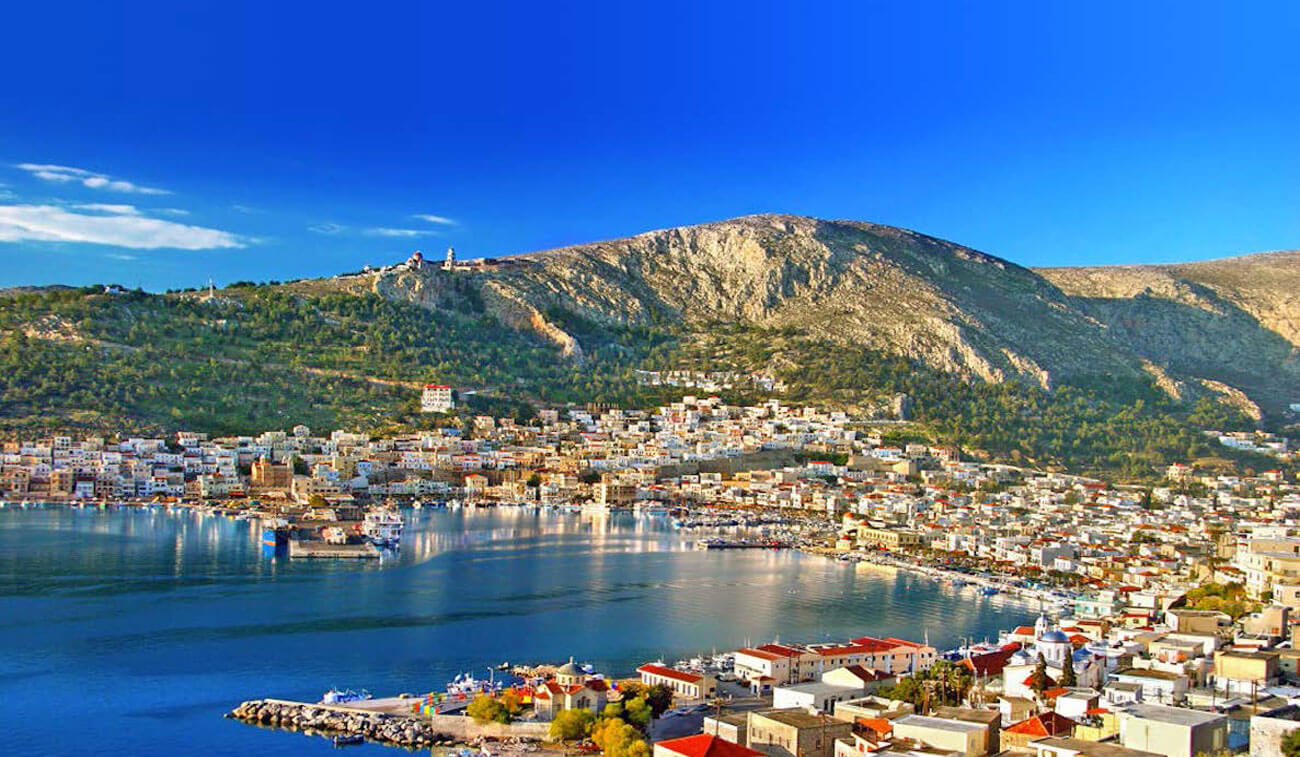
KALYMNOS ISLAND
Climbing up giant vertical rocks; diving in a sea bottom where centuries-old ship wrecks lie; enchanting caves; wonderful beaches und picturesque island settlements. This is Kalymnos: a destination offering more than you can imagine! Welcome to Kalymnos, the fourth largest island of the Dodecanese Group is widely known as an international sponge-harvesting trade center.